Taiwan's Tech Edge Is Exactly What Beijing Can't Stand
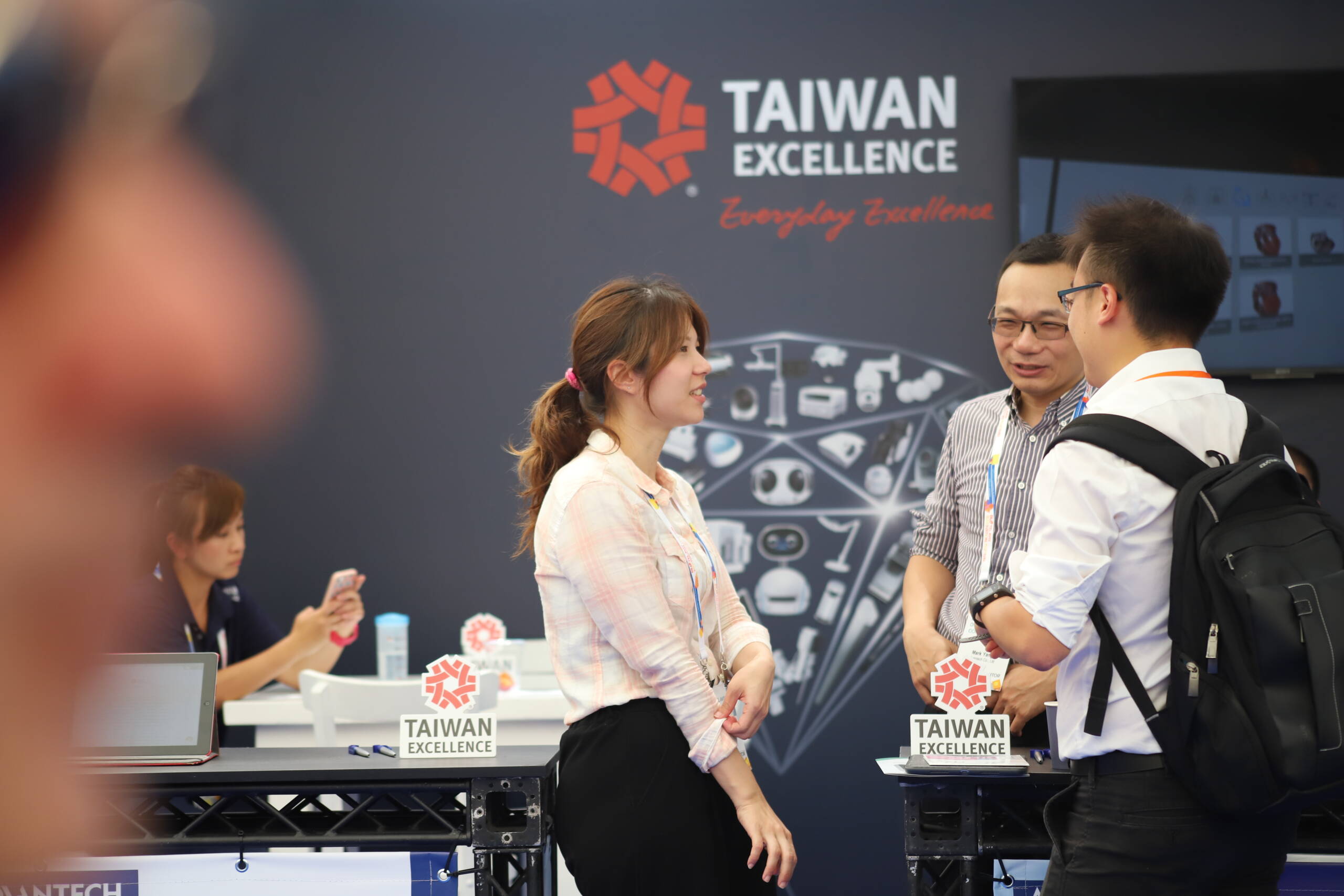
The Taiwan Excellence pavilion doesn’t look like a geopolitical statement. It looks like a trade show floor — badge-wearing professionals, branded signage, product demos humming in the background. But the quiet confidence on display is precisely the thing that unnerves Beijing more than any military exercise or diplomatic maneuver could.
Taiwan’s technology sector has spent decades building what China’s industrial policy has spent trillions trying to replicate: genuine, bottom-up engineering excellence. The Taiwan Excellence program — backed by the Bureau of Foreign Trade and the Ministry of Economic Affairs — isn’t a propaganda badge. It’s a certification earned through documented R&D investment, design quality, manufacturing precision, and environmental standards. Companies that carry the mark have passed a filter that state-directed Chinese manufacturers structurally cannot fake their way through.
The product diagram on the pavilion backdrop says it all. Robotics, surveillance systems, consumer electronics, industrial components, AI hardware — Taiwan’s industrial base spans the full stack of modern technology. This isn’t a nation dependent on one category of export. It’s a diversified technology economy with deep institutional knowledge in each domain, cultivated over generations of engineers who were never told which problems to solve by a five-year plan.
TSMC gets the headlines, and for good reason. But Taiwan’s tech superiority is not a single-company story. It is systemic. The supply chain that supports advanced chip fabrication extends into thousands of Taiwanese firms producing the materials, equipment, optics, chemicals, and substrates that no competitor has managed to fully replicate. China’s semiconductor push — SMIC included — remains pinned years behind the leading edge, held there not only by U.S. export controls but by the accumulated know-how that cannot be transferred by acquiring equipment alone.
What Beijing envies is not just the capability. It’s the legitimacy. Taiwan’s technology brands are chosen by global buyers on merit. They win contracts, earn certifications, and retain customers because the products are good. That form of soft power — rooted in engineering credibility rather than subsidy-driven market flooding — is precisely what China’s tech champions have struggled to build outside of captive or coerced markets.
The people on that trade show floor, engaging buyers and explaining products with practiced ease, represent something the Chinese Communist Party has no mechanism to manufacture: a confident, internationally integrated technology culture that exists on its own terms. That is Taiwan’s real strategic asset. And it’s not going anywhere.